For decades, success in agriculture has been measured primarily by one indicator – yield per hectare. Higher production meant a more efficient farm and better economic performance. Today, however, climate change, soil degradation, increasing pressure on water resources, and biodiversity loss are raising an increasingly important question: is simply producing more enough?
A growing body of scientific research suggests that while yield remains essential to the economic viability of any farm, it can no longer be the sole measure of success. The publication Beyond Yields: A Systems Approach Is Essential for Reconciling Agriculture and Biodiversity highlights the need to view agriculture as an interconnected system in which food production, the conservation of natural resources, biodiversity, and farmers’ well-being are closely linked. This means moving beyond the pursuit of maximum yields alone and seeking a sustainable balance between productivity, profitability, and the health of agricultural ecosystems.
In this context, the way we define a successful farm is also changing. Alongside the tonnes harvested, factors such as soil health and fertility, efficient water use, crop diversity, production costs, and a farm’s ability to adapt to climatic and economic challenges are becoming increasingly important. Responsible agriculture does not mean giving up high productivity. On the contrary, practices such as cover cropping, crop diversification, and agroforestry demonstrate the potential to combine production goals with improved ecosystem functions.
This shift is already becoming visible at farm level. Greater attention is being paid to indicators such as soil organic matter and carbon content, water-holding capacity, crop diversity, and the stability of production from one season to the next. These are not simply environmental indicators – they have direct value for agricultural production. Healthy soil is a productive asset. Soil with good structure and greater water-holding capacity can provide farms with a crucial advantage during periods of drought, while a more diverse agroecosystem can be more resilient under changing climatic conditions.
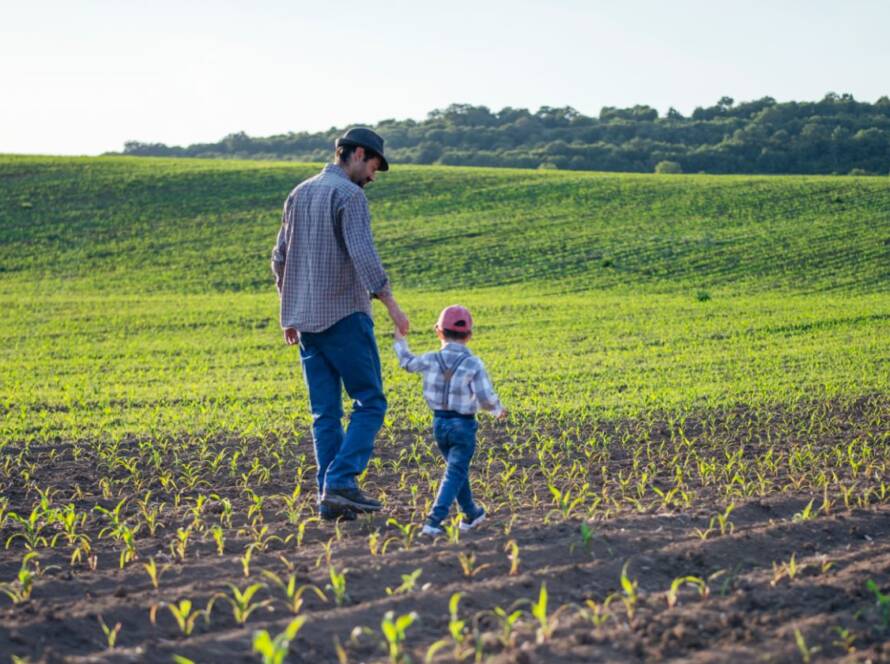
The future of responsible agriculture, therefore, should not be framed as a choice between yield and nature. The challenge is to develop farming systems in which productivity and environmental responsibility can coexist. This requires looking beyond the results of a single harvest and asking whether we are improving our soils, using resources more efficiently, reducing risks for future seasons, and making farms more resilient over time. Because true success in modern agriculture is no longer measured only by how much we produce today, but also by the quality of the land and the strength of the farming systems we leave for tomorrow.