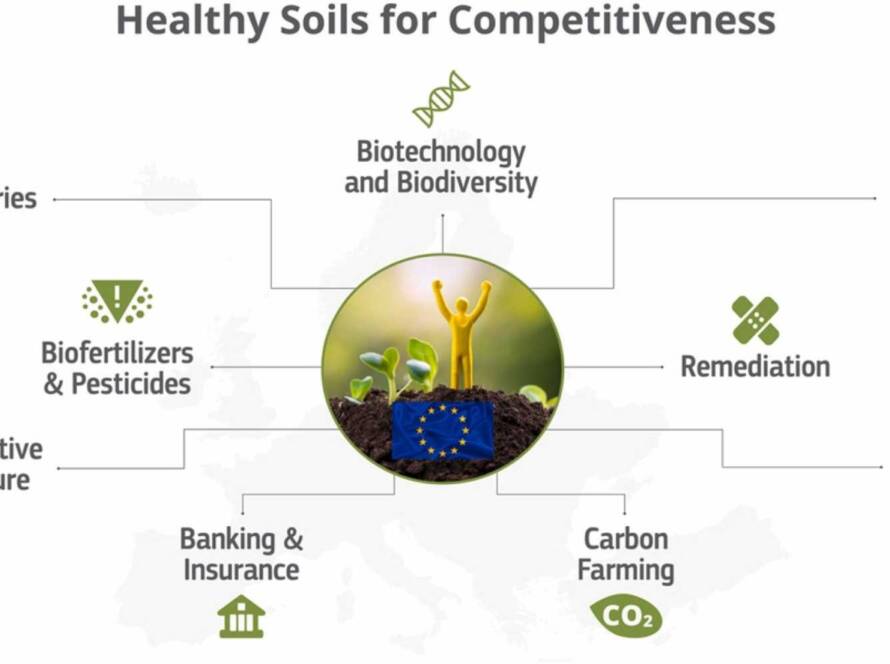
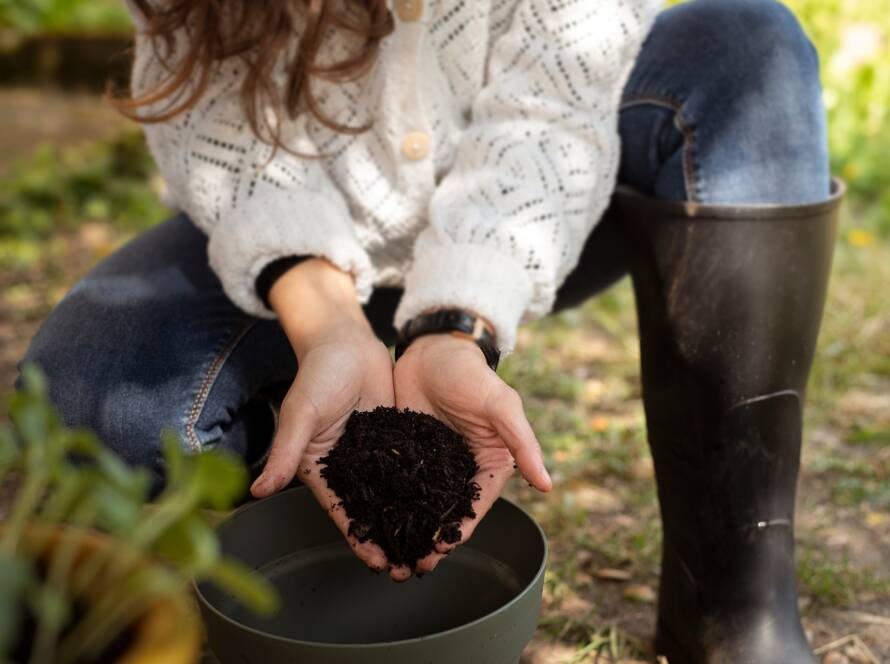
When we think of fertile farmland, we often focus on yields. Yet a healthy agricultural ecosystem is much more than a field of thriving crops. It includes pollinators, beneficial insects, birds, earthworms, fungi and billions of microorganisms working together. Regenerative agriculture places these relationships at the heart of food production. Its aim is not simply to conserve natural resources, but to gradually restore soil health and biodiversity.
Above ground, change begins with plant diversity. Crop rotation, cover crops, flower strips and the preservation of natural habitats provide food and shelter for pollinators and the natural enemies of crop pests. Rather than remaining a uniform environment, farmland becomes a network of interconnected habitats. This can support natural pest control and make agricultural production more resilient to climate variability.
Below the surface, an equally important process takes place. Plant roots release organic compounds that feed soil microorganisms. Bacteria and fungi help break down plant residues and cycle nutrients, while earthworms improve soil porosity and structure. Keeping living roots in the ground for more of the year and maintaining sufficient organic matter creates favorable conditions for a more active and diverse soil community.
Practices such as reduced tillage or no-till farming limit physical disturbance of soil habitats. Cover crops protect the surface from erosion, while compost and crop residues return organic matter to the system. More diverse crop rotations support different root systems and microbial communities. Where appropriate, integrating livestock through well-managed grazing and adopting agroforestry can further enhance nutrient cycling and habitat diversity.
The benefits also address practical needs on the farm. Better soil structure can improve water infiltration and retention, while active biological processes help make nutrients available to plants. This does not mean that every regenerative practice automatically increases yields or reduces costs: outcomes depend on soil type, climate, crops and management. A gradual transition, supported by monitoring indicators such as soil cover, organic matter, infiltration and beneficial organisms, is therefore often the most sensible approach.
Biodiversity above and below ground are not separate issues. A wider variety of plants produces a wider range of root exudates; healthier, more biologically active soil supports plant growth, and those plants in turn provide resources for insects and other wildlife. This connection is what makes regenerative farming a long-term investment in farm resilience. For Agviser, it is an essential conversation about the future of agriculture: productivity and care for natural processes can advance together when decisions are guided by observation, knowledge and practices suited to each field.