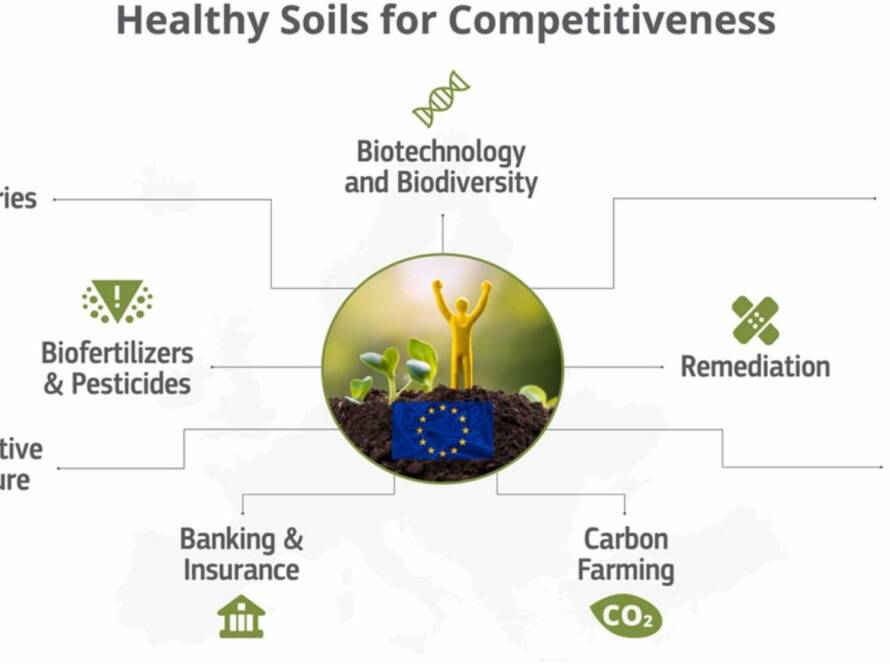
In a world where agriculture faces depleted soils, climate change, and growing food demand, traditional methods are increasingly struggling to meet farmers’ real needs. This is where regenerative agriculture stands out as a long-term solution, because it doesn’t simply aim to “preserve” resources-it actively works to restore them. It is based on the understanding that soil is a living organism that can be nourished and strengthened. Instead of relying on intensive cultivation and a high dependence on external inputs, this model promotes practices that improve soil structure, increase organic matter, support soil life, and lead to better water and nutrient retention. As a result, farms become more resilient to drought, extreme rainfall, and unstable seasons, while the land gradually regains its productivity.
One of the key ideas is reducing aggressive soil disturbance, since frequent tillage disrupts the soil’s natural structure and leads to the loss of organic matter. That is why reduced or no-till methods are applied, along with cover crops that protect the soil, reduce erosion, and help build organic matter. Crop rotation and diversification also play an important role, as they support natural nutrient cycles and encourage a richer soil microbiome. These actions are complemented by composting and organic amendments that restore fertility, and in some systems, by agroforestry, which supports biodiversity and creates a more stable microclimate. In mixed farming systems, sustainable pasture management and well-planned rotational grazing improve nutrient cycles and support ecosystem recovery.
The importance of regenerative agriculture goes far beyond yields for a single season. Soil is the foundation of food security, and when its health improves, its ability to retain water increases-something that is critical during droughts and unpredictable rainfall. In addition, regenerative practices help capture and store carbon in the soil, making them an important tool in the fight against climate change. For farmers, this approach can also bring economic benefits by reducing dependence on synthetic fertilizers and intensive chemical solutions, while building a more stable and resilient farm business.
The transition to regenerative practices is not an abrupt change, but a process that begins with small, well-planned steps and gradually builds a healthier and more resilient farm. Regenerative agriculture is not just a trend-it is a practical approach that can transform land and create long-term value for both farming operations and the environment. At AGviser, we believe that healthy soil means a sustainable future, because true productivity starts from the ground up-from the land that feeds us.