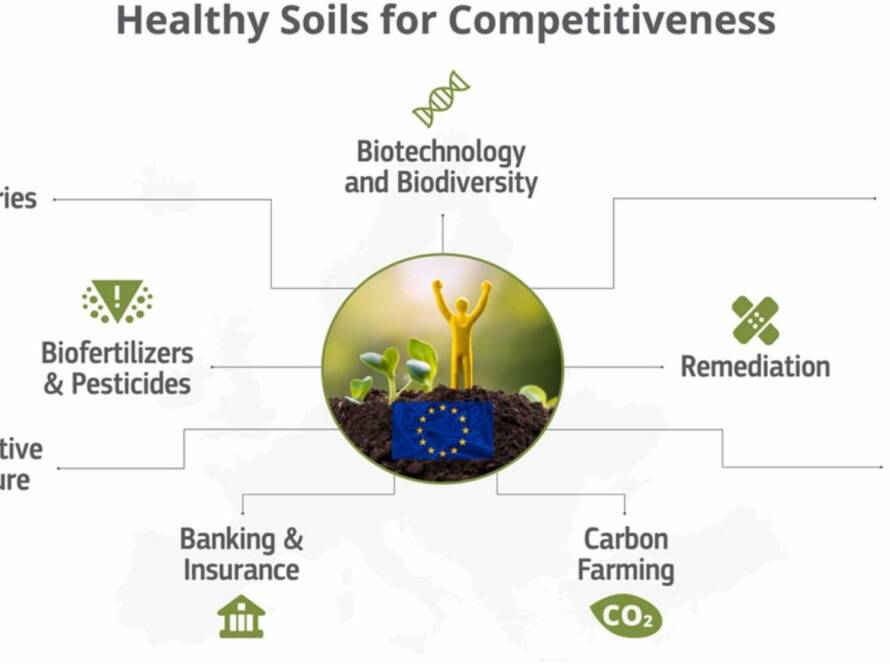
Climate change is no longer a challenge of the future-it is a reality that is increasingly affecting agriculture. Prolonged droughts, extreme temperatures, and unpredictable rainfall are forcing farmers to produce more with fewer resources while preserving the long-term health of their soils. In this context, Carbon Farming is becoming an increasingly important approach, combining sustainable resource management, regenerative agricultural practices, and modern technologies to position agriculture as an active contributor to climate change mitigation.
The concept of Climate-Positive Agriculture goes beyond the traditional principles of sustainable farming. Rather than simply reducing greenhouse gas emissions, it aims to enable agricultural systems to actively capture and store carbon in soils and vegetation. This approach transforms farmland into a valuable carbon sink while simultaneously improving soil fertility, increasing resilience to climate stress, and supporting long-term agricultural productivity.
At the heart of carbon farming are practices that restore natural soil processes. Reduced or no-till cultivation helps preserve soil structure and minimize the loss of organic matter, while cover crops protect the soil from erosion and enrich it with valuable nutrients. Diverse crop rotations improve soil biology, and the integration of perennial crops and agroforestry systems further increases the amount of carbon that can be stored within agricultural landscapes. The result is healthier soils, improved water and nutrient efficiency, and more stable crop yields even under increasingly challenging climatic conditions.
Today, these regenerative practices are increasingly supported by precision agriculture technologies. Through satellite imagery, GPS guidance, soil analysis, smart sensors, and digital farm management platforms, farmers can monitor crop development in real time and apply fertilizers, crop protection products, and irrigation only where they are needed. This data-driven approach improves production efficiency, optimizes input costs, and significantly reduces agriculture’s environmental footprint. According to Corteva’s sustainability strategy, the combination of innovation, scientific research, and regenerative farming practices is key to developing climate-positive agriculture capable of producing more while using fewer natural resources.
Another important development is the growing recognition of farmers as providers of ecosystem services. International organizations and industry initiatives increasingly encourage incentive programs that reward producers not only for the food they grow but also for the environmental benefits they generate. Improving soil health, increasing biodiversity, sequestering carbon, and managing water resources sustainably are becoming valuable outcomes alongside crop production. This marks the transition toward a new agricultural model where economic performance and environmental stewardship reinforce one another.
For farmers in Bulgaria and across Europe, carbon farming is no longer simply a global trend-it represents a practical opportunity to build more competitive, resilient, and sustainable farming businesses. By combining precision agriculture technologies with regenerative farming practices and informed agronomic decision-making, producers can increase yields, reduce production costs, and protect their most valuable resource: healthy soil.
At Agviser, we believe that the future of agriculture belongs to farmers who invest in knowledge, innovation, and sustainable solutions. Our mission is to support producers through expert agronomic consulting and advanced precision agriculture technologies that improve farm performance while protecting natural resources. Sustainable agriculture is not about compromising productivity-it is about investing in healthier soils, more profitable farms, and a more resilient future for generations to come.